
Reading Glasses or Magnifying Glass
Which do you need?
Struggling to read small print does not always mean you need stronger reading glasses. In some situations, reading glasses are the better choice; in others, a magnifying glass can make the task easier and clearer. Understanding the difference can help you choose the right tool for books, labels, menus, mail, instructions, and other everyday reading.
When Reading Glasses Are the Better Choice—and When They Aren’t
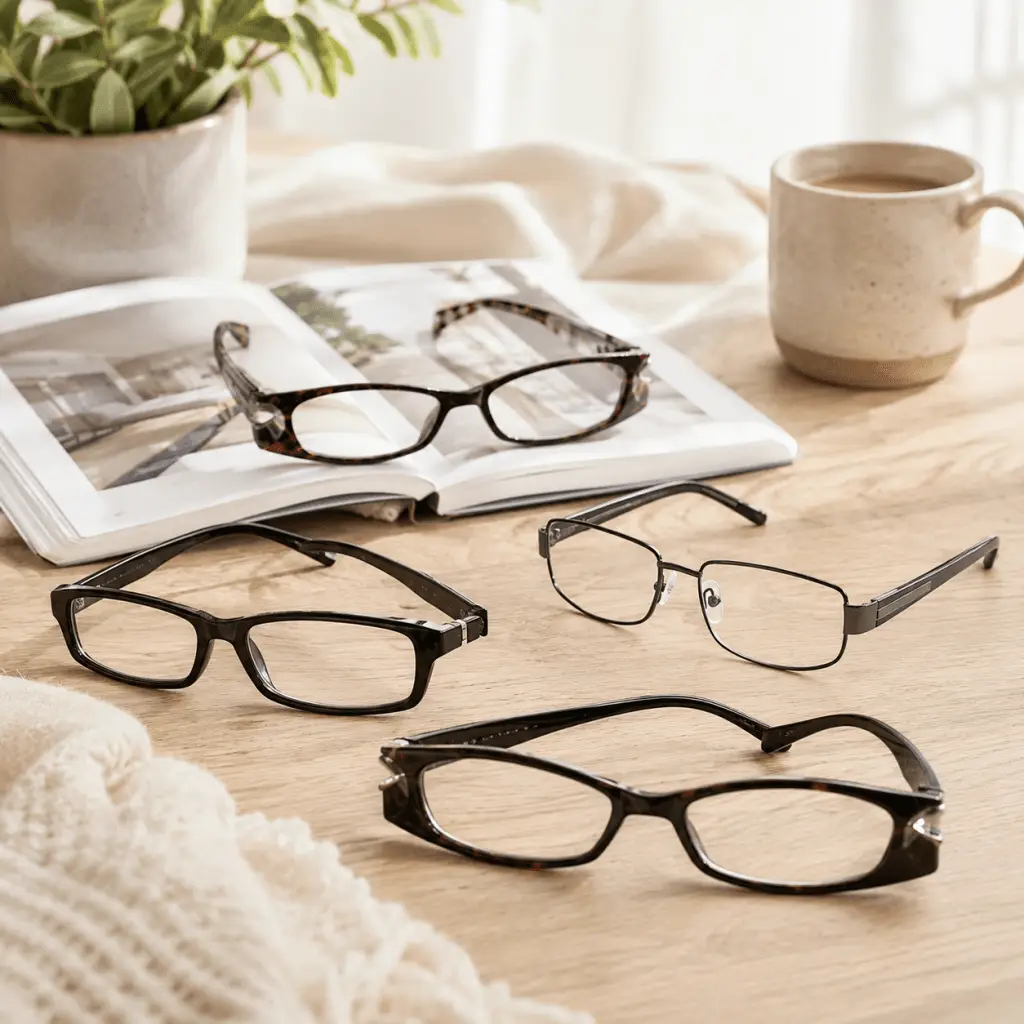
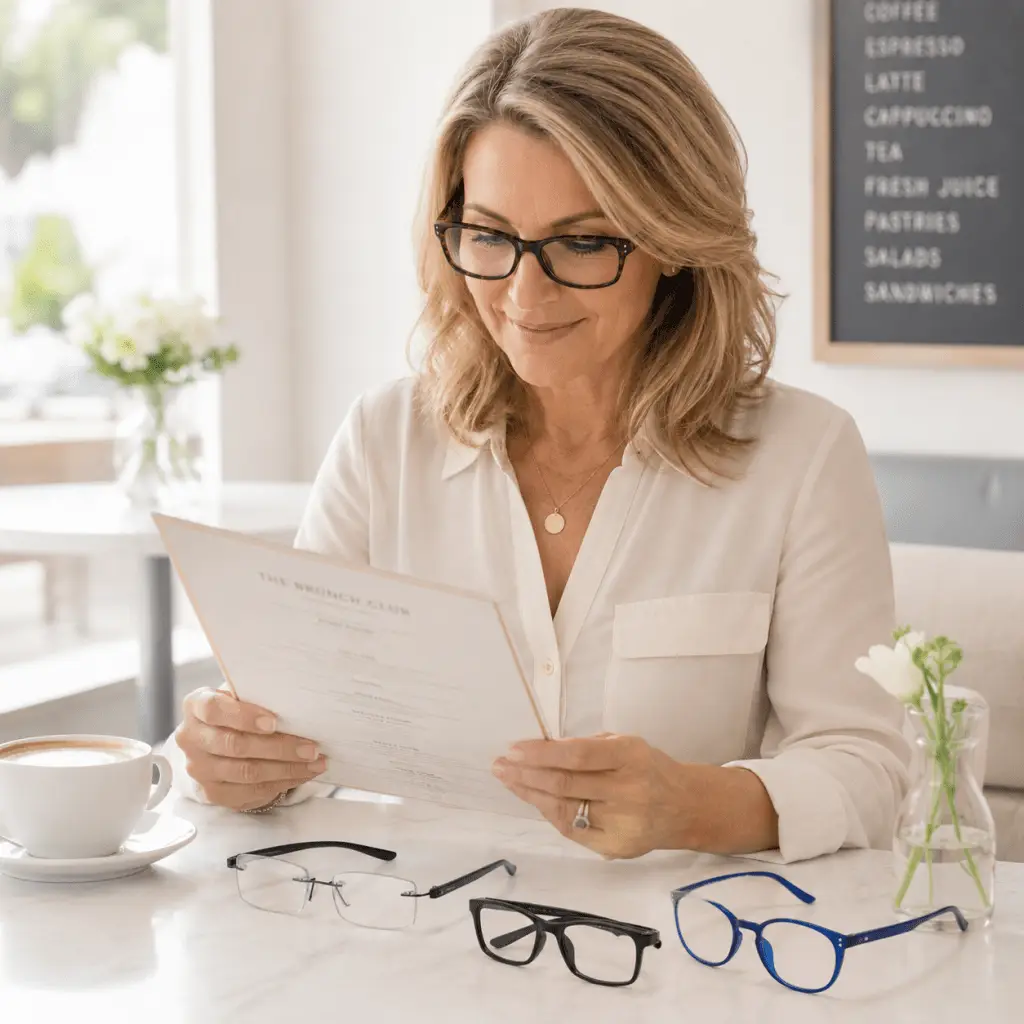
Reading glasses are often the better choice when you want a simple, hands-free solution for everyday close-up tasks. They are easy to wear while reading, checking a phone, sewing, writing, cooking from a recipe, or working at a desk, and they let you see a much wider area than a magnifying glass.
They also give you more choices. Reading glasses are available in many frame shapes, colors, sizes, and strengths, so it is usually easier to find a pair that feels comfortable and suits your style. Many people keep different strengths for different tasks or leave extra pairs in places where they use them most, such as the kitchen, office, car, or bedside table.
They are compact and easy to store in a case, purse, or drawer, but that convenience has a downside: they are also easy to misplace. Some people solve this by keeping several inexpensive pairs nearby or choosing a neck cord or folding style.
Reading glasses are most useful when the main problem is close-up focus. They may not be enough when print is extremely small, contrast is poor, or you need to inspect one tiny detail. Stronger reading glasses can also shorten the comfortable viewing distance, so simply increasing the strength is not always the best answer. In those situations, a magnifying glass may work better.
When a Magnifying Glass Is the Better Choice—and When It Isn’t
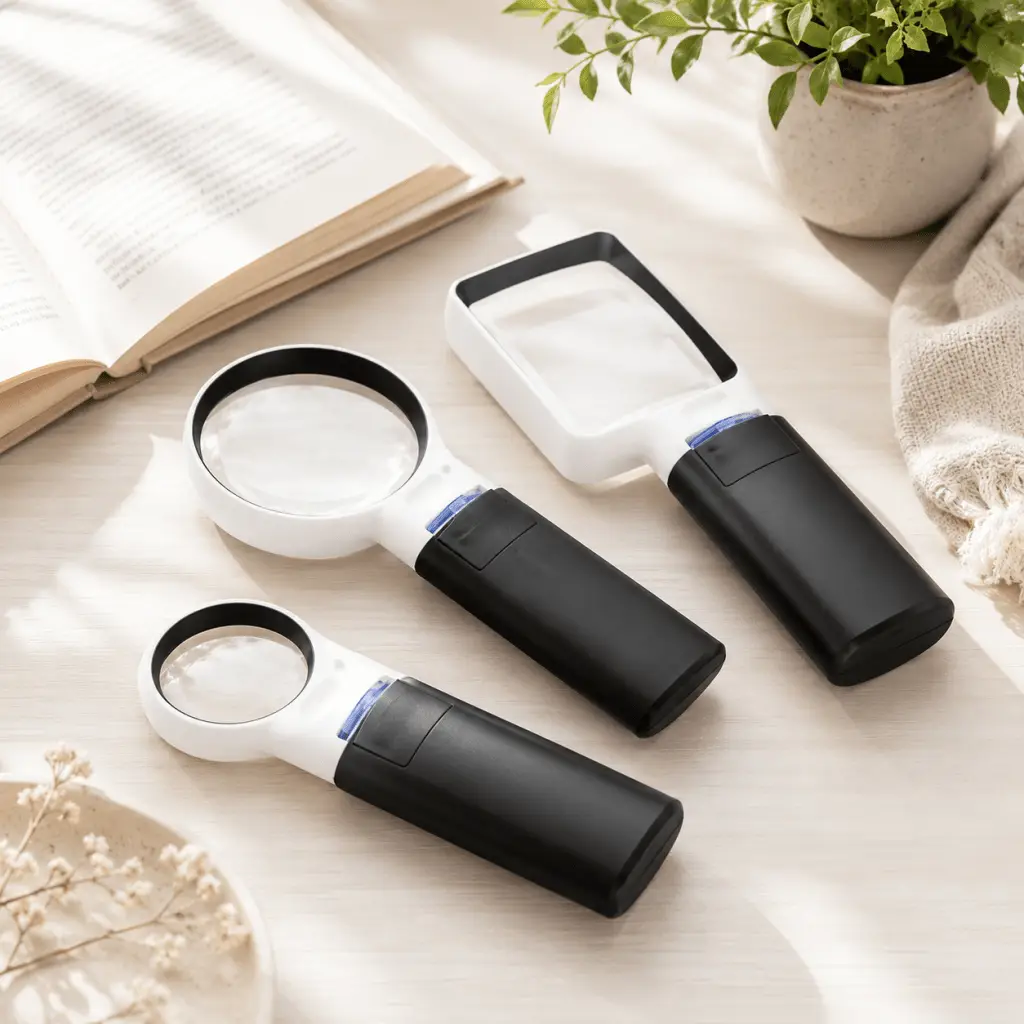
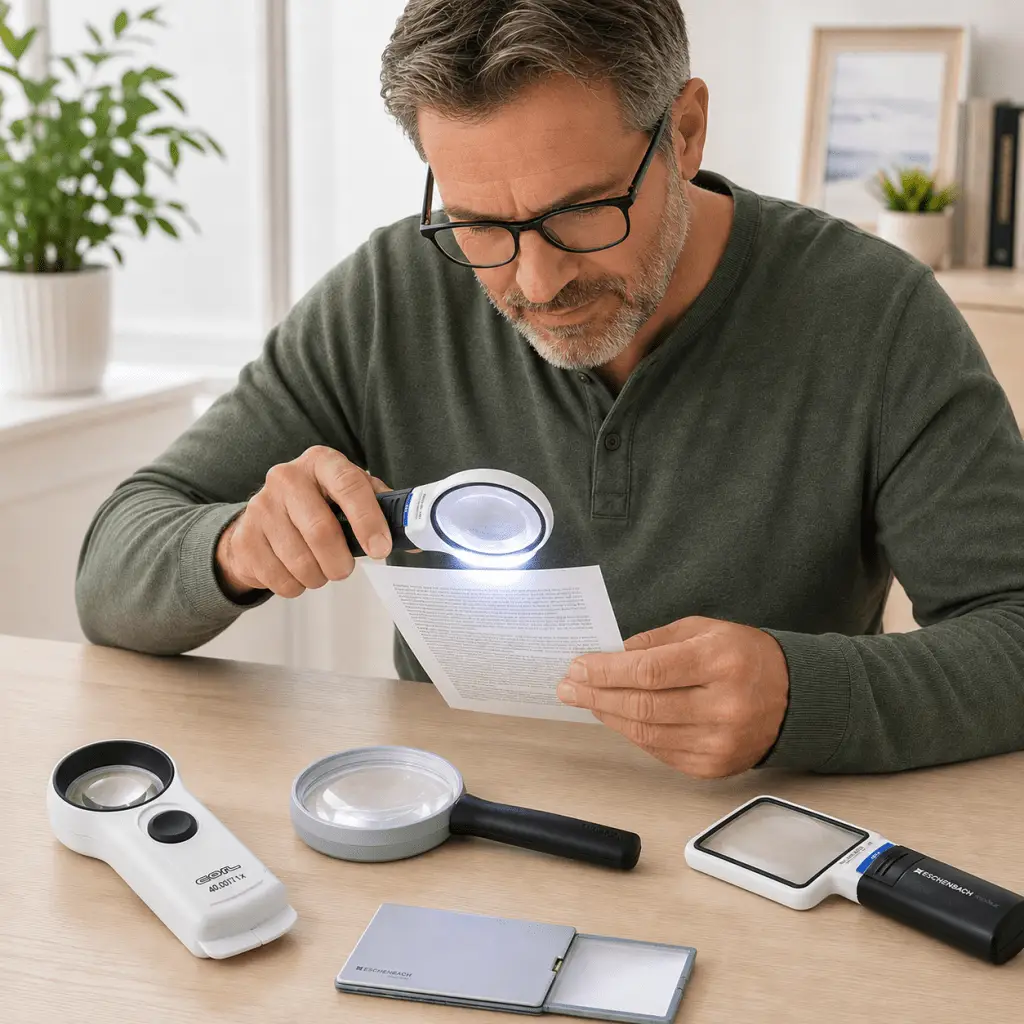
A magnifying glass is often the better choice when reading glasses bring print into focus but still do not make it large enough. Magnifiers enlarge a specific word, number, label, photograph, or fine detail, making them useful for medication bottles, bills, instructions, price tags, maps, crafts, and very small print. They can also be used with prescription glasses or reading glasses when extra enlargement is needed.
There are many styles available for different tasks. Handheld magnifiers come with different handle shapes and lens sizes, while pocket models are easier to carry. Lighted magnifiers add illumination directly over the print, and higher-powered models can provide more enlargement than most standard reading glasses. Stand and hands-free designs may be easier for longer tasks, and some magnifiers offer attachable yellow lenses that can improve contrast and make certain details easier to see.
Magnifiers do have limitations. A handheld model uses one of your hands, usually shows a smaller area than reading glasses, and may be difficult to hold steady. Higher magnification also generally means a smaller viewing area and a shorter distance between the lens and the material. Magnifiers are often best for enlarging specific details, while reading glasses may still be more comfortable for reading several pages or completing longer hands-free tasks.
Can You Use Reading Glasses and a Magnifying Glass Together?
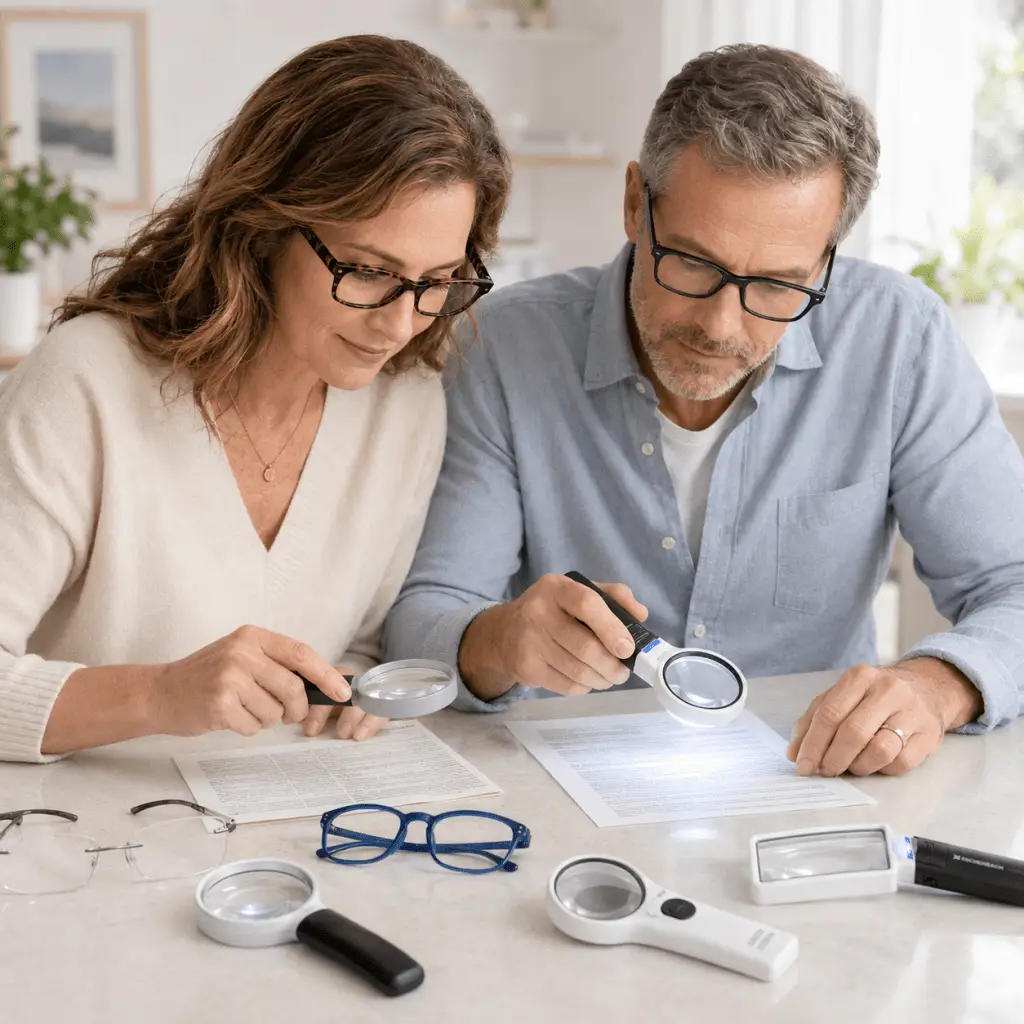
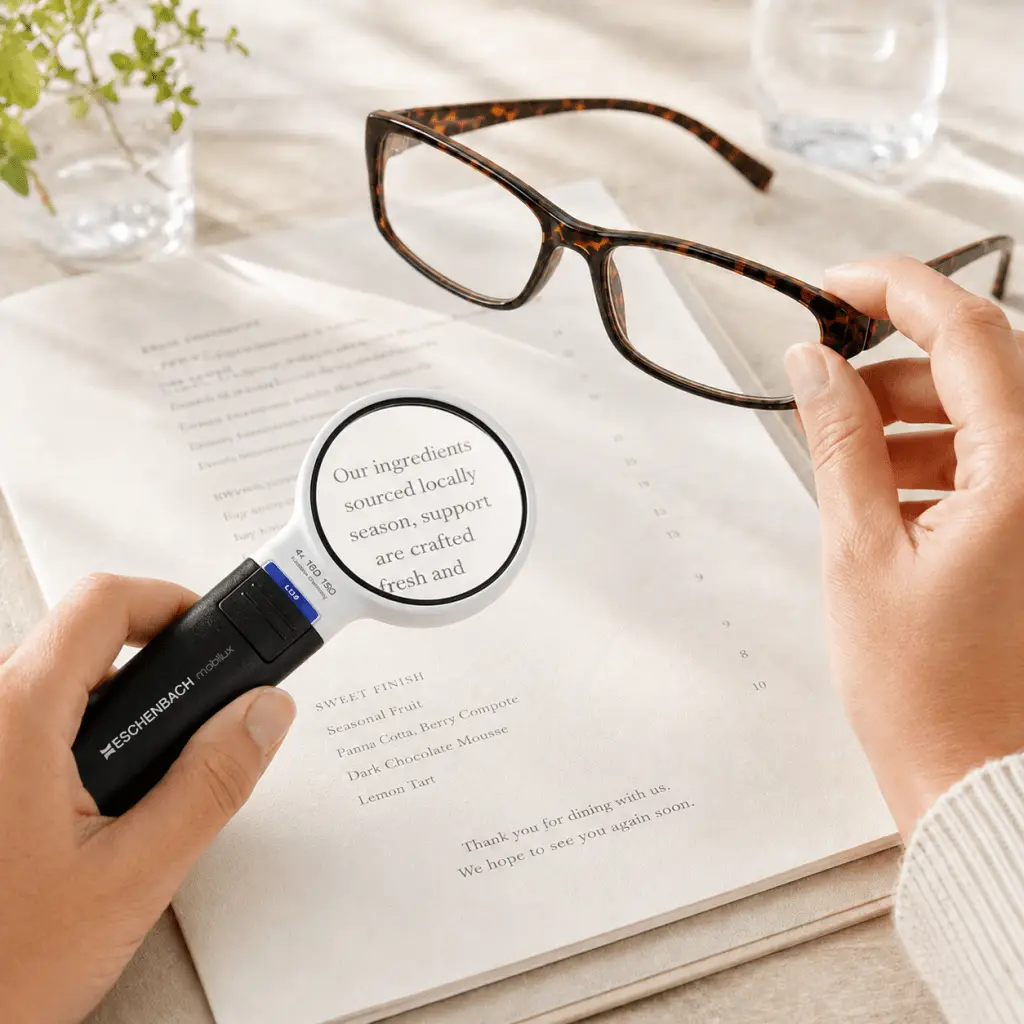
Reading glasses and magnifiers can be used together because they solve different problems. Reading glasses help bring nearby material into focus, while a magnifier makes a smaller section appear larger. Someone may wear reading glasses for a book, recipe, or paperwork and then use a magnifier only for especially small print, faded numbers, or fine details.
A magnifier can usually be used while wearing reading glasses or prescription glasses. This can provide more enlargement than either option alone, but the material may need to be held closer and only a smaller area may remain visible. The correct distance between the eyes, magnifier, and print often matters more than simply choosing the highest strength.
For many people, the most practical solution is to keep reading glasses available for everyday close-up tasks and a lighted or pocket magnifier nearby for the print that is still difficult to see. Using both does not necessarily mean eyesight has suddenly become much worse—it may simply mean one tool is better suited to certain tasks than the other.
Why Stronger Is Not Always Better
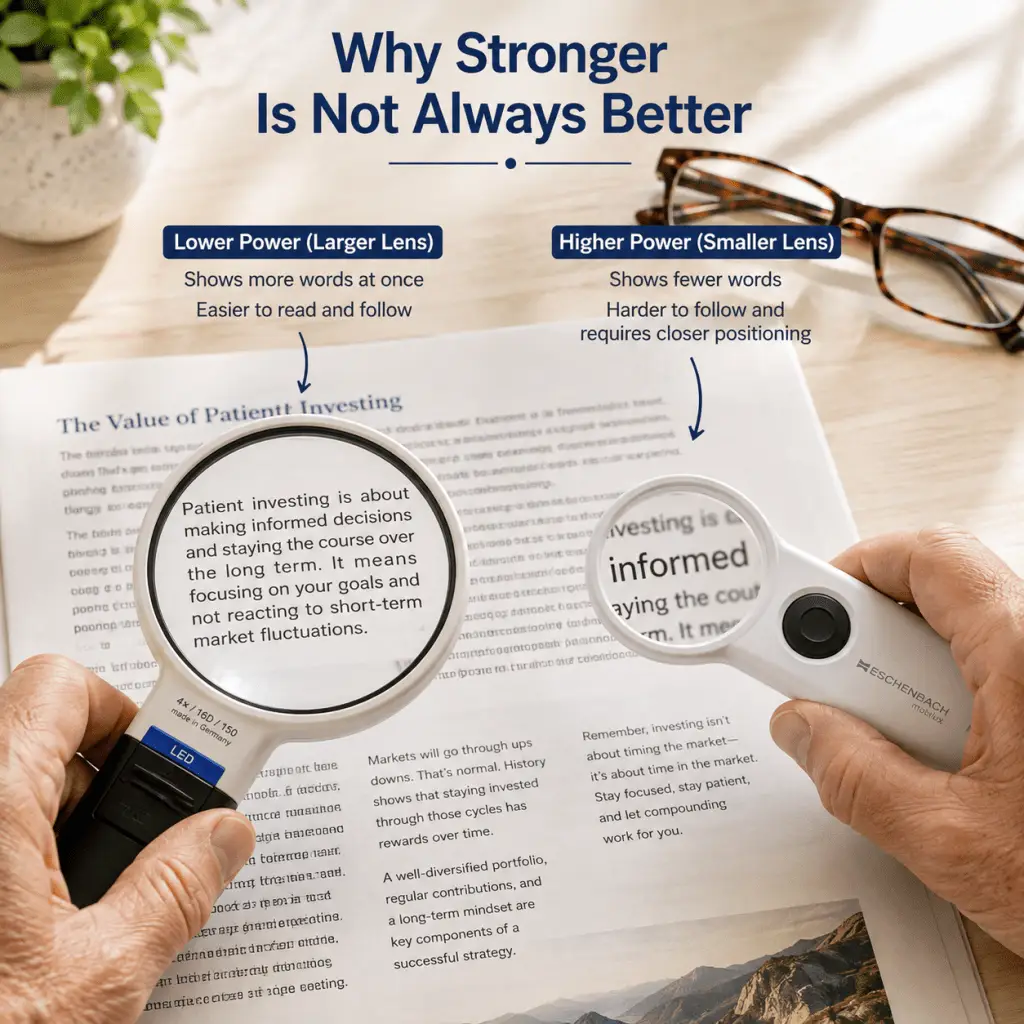
It is easy to assume that stronger reading glasses or a higher-powered magnifier will automatically make everything easier to see. In reality, more strength can create new problems. Stronger reading glasses usually require you to hold the material closer, while higher-powered magnifiers often show a smaller area at one time.
Lens size also matters. A lower-powered magnifier with a larger lens may let you see several words or lines at once, while a smaller, stronger lens may be better for checking one number or tiny detail. Lighting, contrast, lens quality, and the distance between the lens and the print can affect clarity just as much as the listed strength.
The best choice is usually the lowest strength that makes the task clear and comfortable. This gives you a wider viewing area, a more natural working distance, and
Reading Glasses vs. Magnifying Glass: Quick Comparison
| Consideration | Reading Glasses | Magnifying Glass |
|---|---|---|
| Best for | Everyday close-up reading and tasks | Very small print and specific details |
| Viewing area | Wider view of the page or workspace | Smaller, targeted viewing area |
| Hands-free use | Yes | Depends on the style |
| Strength choices | Available in many standard reading strengths | Available in lower through much higher magnification |
| Built-in lighting | Available, but less common | Available in many handheld, pocket, and stand models |
| Portability | Easy to carry, store, and misplace | Pocket styles travel easily; larger styles require more space |
| Longer reading | Usually more comfortable for books and paperwork | More practical with a stand or hands-free design |
| Main limitation | May not make extremely small print large enough | May occupy one hand and show less at one time |
Which One Is Right for You?
The right choice depends on what you are trying to see and how you plan to use it. Reading glasses are usually better for wider, hands-free everyday viewing, while a magnifying glass is more useful when you need extra enlargement for very small print or a specific detail. Many people find that keeping both nearby works best—reading glasses for regular close-up tasks and a lighted or pocket magnifier for the times when print is still too small. Choose the lowest strength that makes the task clear and comfortable rather than assuming the strongest option will work best.
Download our FREE reading chart HERE to see what strength might work best for you!