How Much Magnification Do I Need to Read Small Print?
Choosing the right magnification can be confusing, especially if you are trying to read books, mail, menus, medicine labels, price tags, or other small print.
Many people assume that the strongest magnifier is always the best choice, but that is not always true. The right magnification depends on what you are reading, how small the print is, how much lighting you need, and how close you are comfortable holding the magnifier.
Start With What You Need to Read
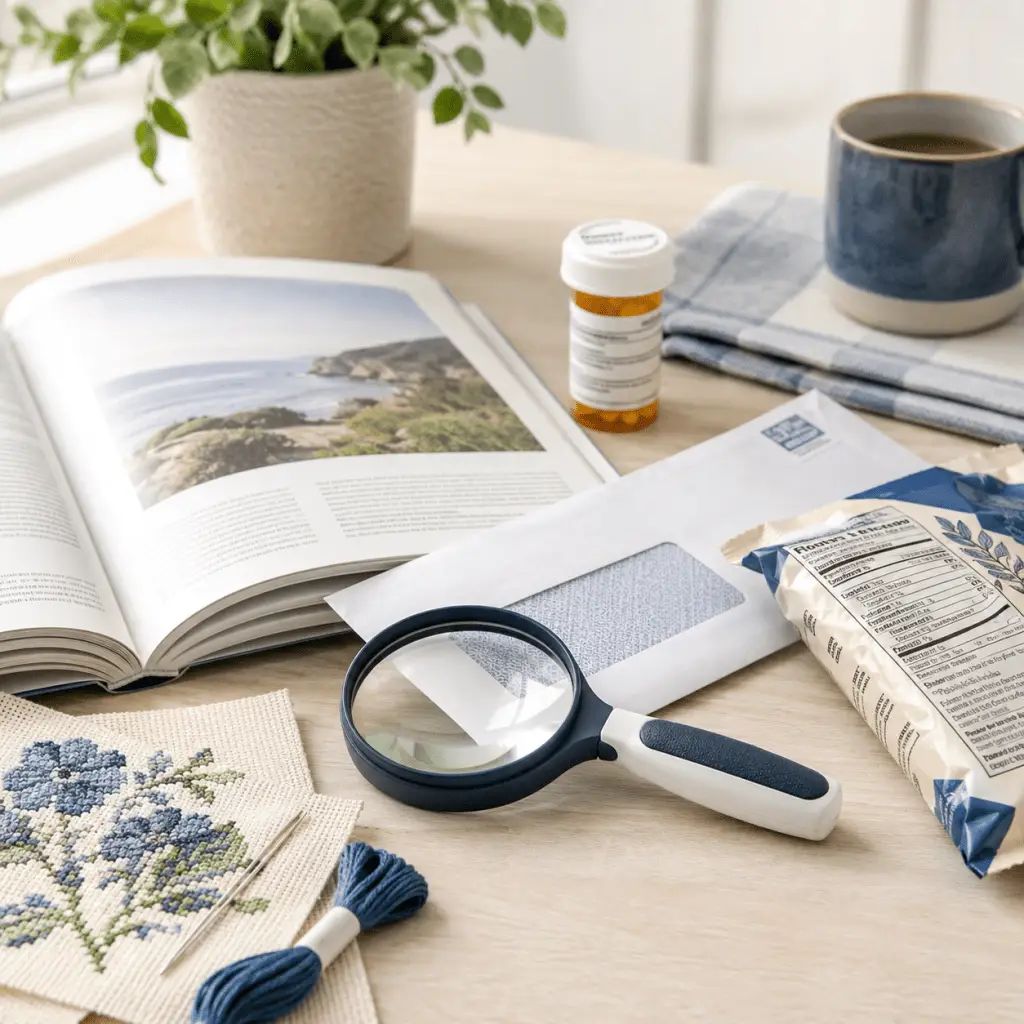
Before choosing a magnifier, think about the task you need help with most.
Common reading tasks include:
- Books and magazines
- Mail and bills
- Prescription bottles
- Food labels
- Menus
- Price tags
- Directions and product instructions
- Hobby or craft details
The smaller the print, the more magnification you may need. But the size of the print is only one part of the decision.
Use a Reading Chart as a Starting Point
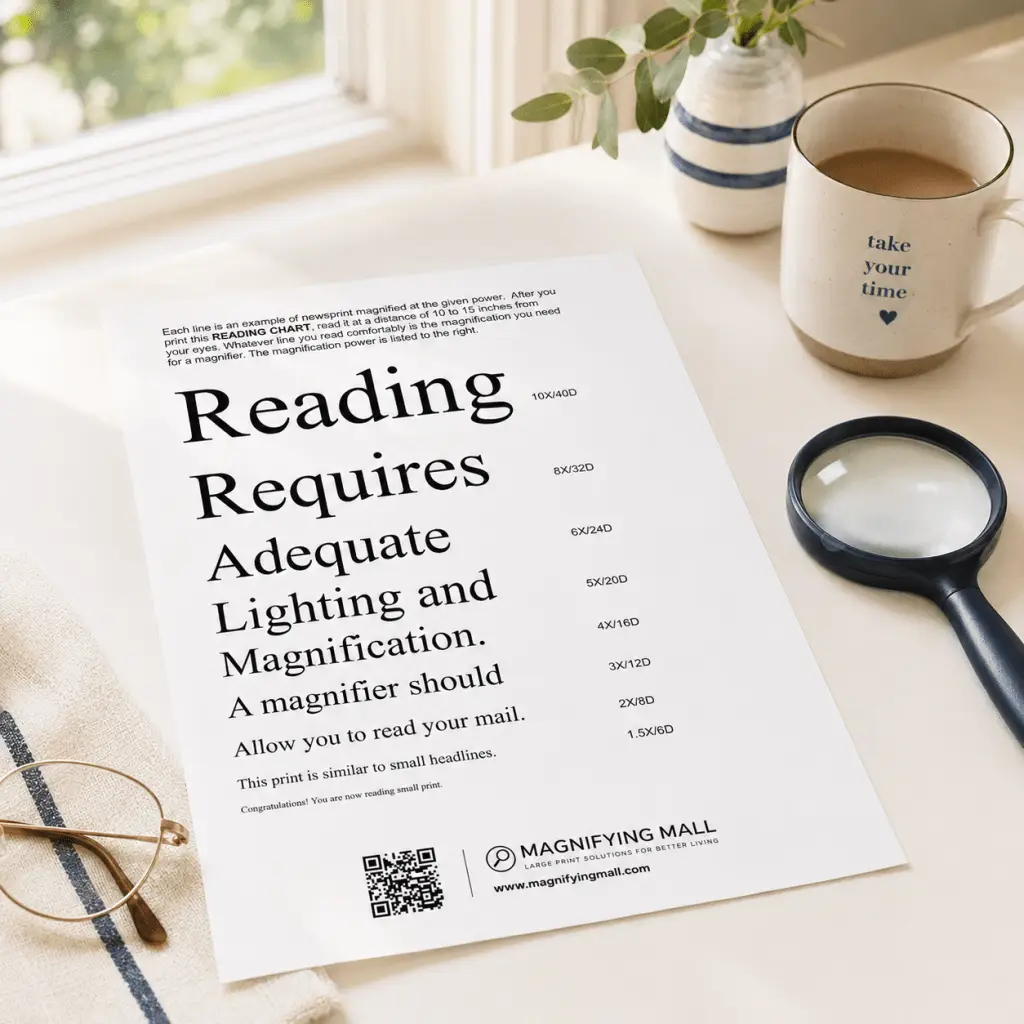
A reading chart can help you estimate what magnification level may be a good starting point.
It is not a perfect replacement for professional vision advice, but it can help you narrow down your options before shopping.
Use the chart to see which print sizes are difficult for you, then match that result with a general magnification range.
Download our free reading chart to help find your starting magnification.
What Do Magnification Numbers Mean?
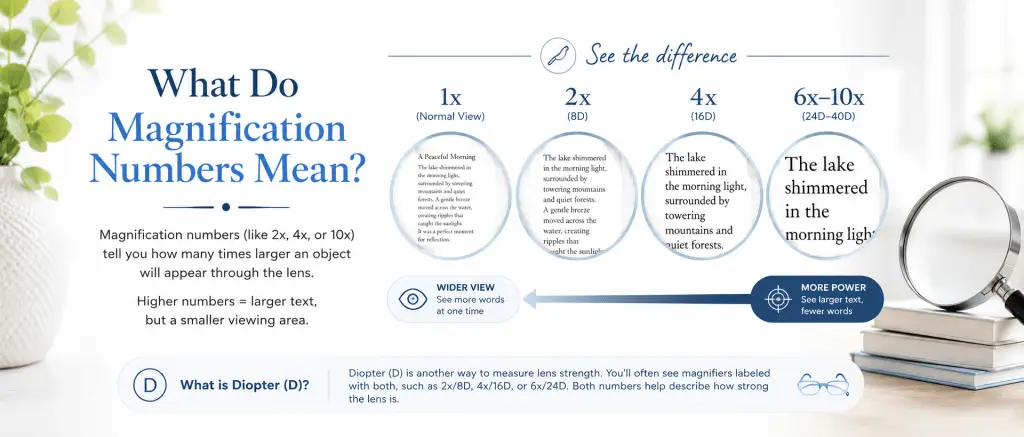
Magnifiers are usually labeled with numbers such as 2x, 3x, 4x, 6x, or 10x.
The “x” means how many times larger an object may appear through the lens. For example, a 4x magnifier makes print appear larger than a 2x magnifier.
You may also see a number followed by D, such as 8D, 12D, 16D, or 20D. The D stands for diopter, which is another way to describe the optical strength of the lens.
On many magnifiers, the magnification and diopter are shown together, such as:
- 2x / 8D
- 3x / 12D
- 4x / 16D
- 5x / 20D
- 6x / 24D
- 8x / 32D
- 10x / 40D
For most shoppers, the x number is the easiest number to use when choosing a magnifier. The diopter number is helpful because some reading charts and product descriptions include both.
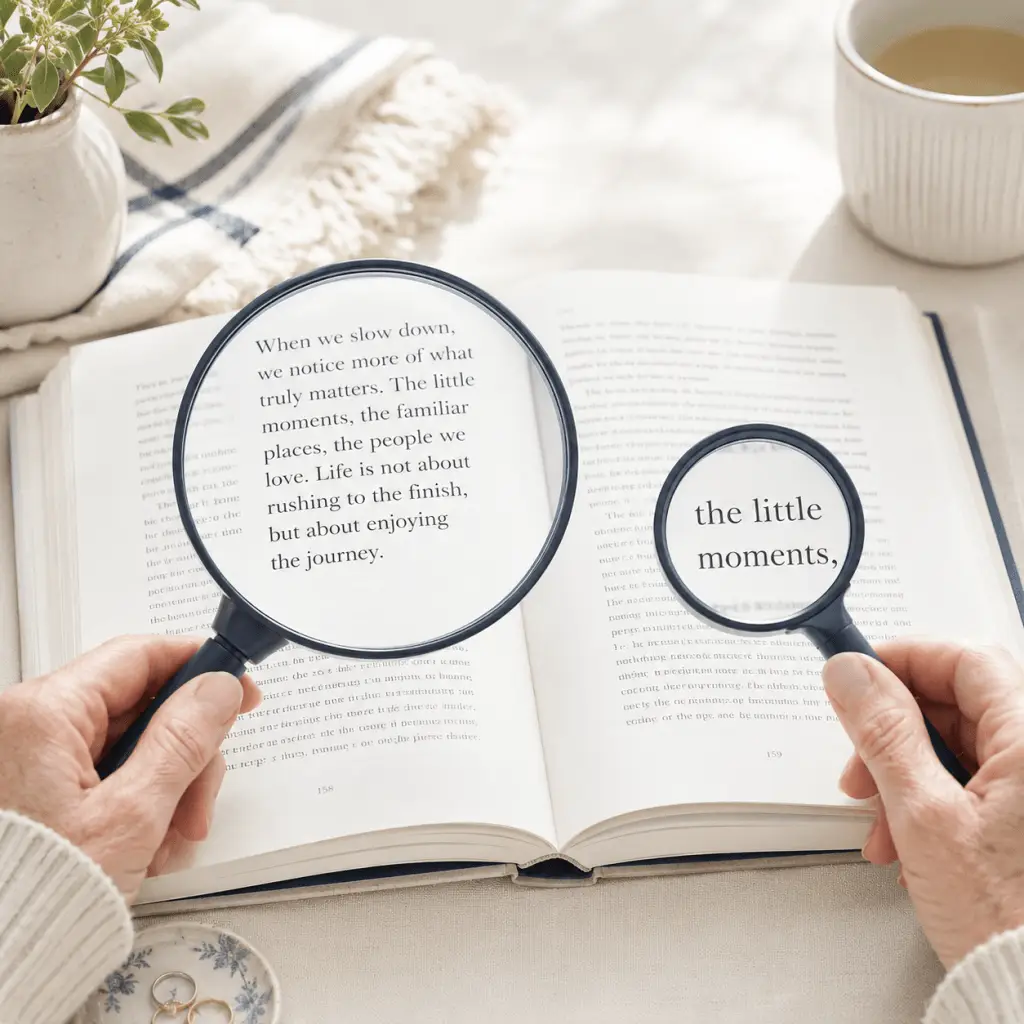
However, higher magnification usually means a smaller viewing area. That means you may see fewer words at one time.
Stronger Is Not Always Better
It is easy to think that a stronger magnifier will automatically be easier to use. But that is not always the case.
Higher magnification can help with very small print, but it may also:
- Show fewer words at once
- Require a closer working distance
- Be harder to keep steady
- Feel less comfortable for longer reading
- Make it harder to follow lines of text
For many everyday reading tasks, a lower or middle magnification may be easier to use than the strongest lens available.
Common Magnification Ranges
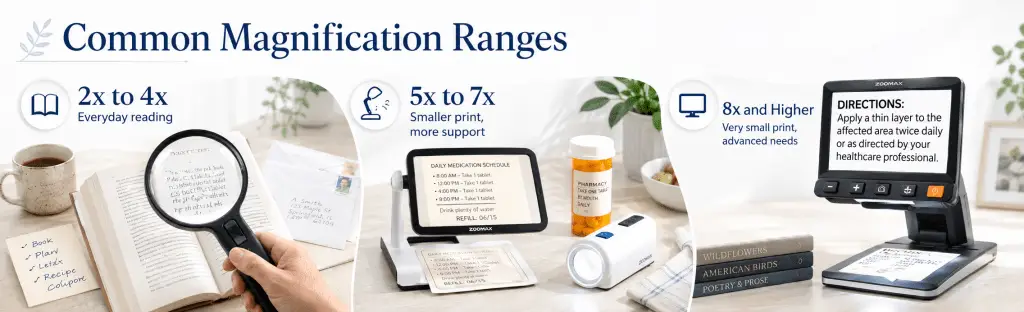
2x to 4x Magnification
This range is often helpful for everyday reading tasks such as books, menus, labels, mail, and general small print.
These magnifiers usually provide a wider viewing area, which can make reading feel more natural.
5x to 7x Magnification
This range may be helpful when print is smaller or when lower magnification is no longer enough.
Stand magnifiers and lighted magnifiers can be useful in this range because they help with stability and lighting.
8x and Higher Magnification
Higher magnification may be needed for very small print or more advanced low vision needs.
At this level, the viewing area is usually smaller, so some people may find a video magnifier easier for longer reading.
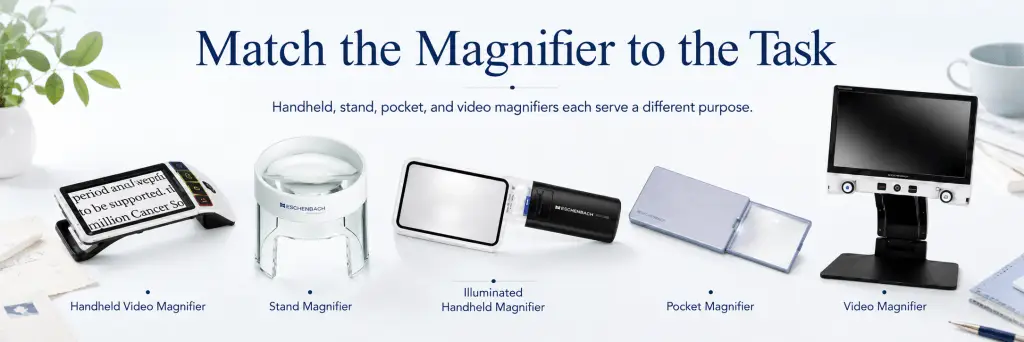
Match the Magnifier to the Task
The right magnification is only part of the choice. The style of magnifier also matters.
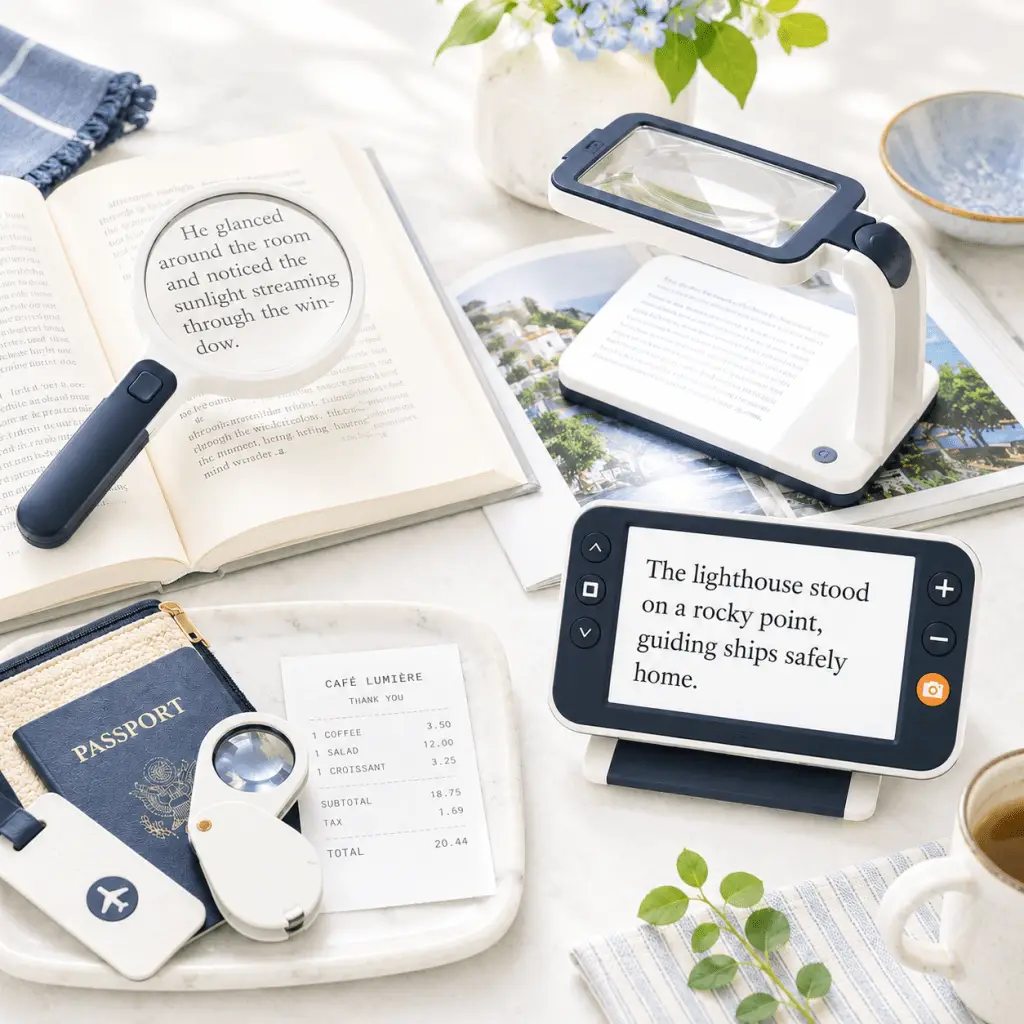
A handheld magnifier may work well for quick reading tasks.
A stand magnifier may be better if you have shaky hands or want the magnifier to rest directly on the page.
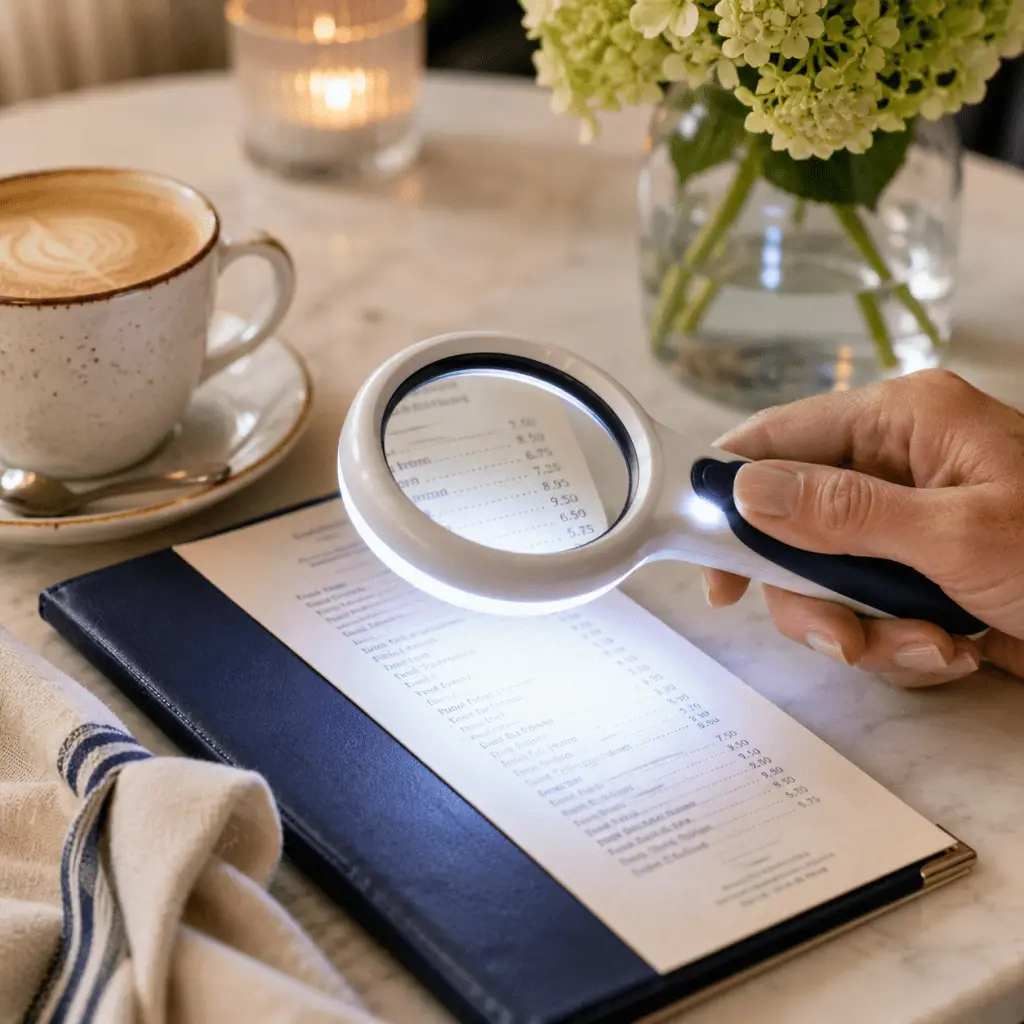
A pocket magnifier is helpful for travel, restaurants, shopping, and quick use outside the home.
A video magnifier may be better if you need stronger magnification, a larger viewing screen, or contrast settings.
When to Consider Lighting
Lighting can make a big difference. Many people do better with a lighted magnifier because the built-in light helps improve contrast and makes print easier to see.
If you struggle more in restaurants, stores, or rooms with poor lighting, a lighted magnifier may be a better choice than a non-lighted one.
Need Help Choosing?
If you are not sure which magnification or product style is right, start with the reading chart, then think about how you will use the product most often.
You can also use the search bar to look for specific terms such as:
- 4x magnifier
- lighted handheld magnifier
- stand magnifier
- pocket magnifier
- Eschenbach magnifier
- video magnifier
- glare protection
Choosing the right low vision product does not have to be overwhelming. Start with the task, find your starting magnification, and choose the product style that fits how you plan to use it.

Frequently Asked Questions
What strength magnifier is best for reading small print?
Many people start with 2x to 4x magnification for everyday reading tasks. Smaller print may require 5x to 7x or higher, depending on the person and the task.
Is stronger magnification always better?
No. Higher magnification makes text appear larger, but it usually reduces the viewing area. That means you may see fewer words at one time.
What does diopter mean on a magnifier?
Diopter is another way to describe lens strength. Many magnifiers show both magnification and diopter, such as 4x / 16D.
What type of magnifier is best for shaky hands?
A stand magnifier may be easier because it rests directly on the page and helps keep the lens steady.
When should I consider a video magnifier?
A video magnifier may be helpful if you need stronger magnification, a larger viewing screen, or contrast settings for longer reading.