
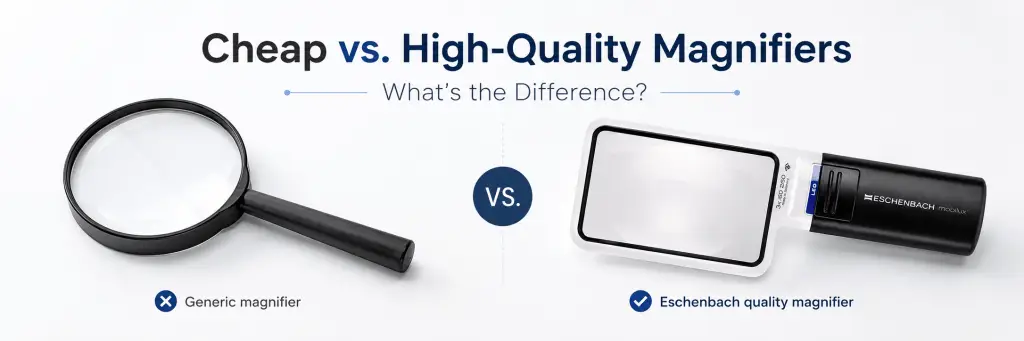
What Is the Difference Between a Cheap Magnifying Glass and a High-Quality Magnifier?
At first glance, many magnifying glasses look similar. One may cost less than $20, while another may cost significantly more. The difference is not always obvious until you begin using them. Lens quality, clarity, lighting, field of view, distortion, durability, and comfort can all affect how well a magnifier works—especially for someone with low vision.
A higher price does not automatically mean a magnifier is right for every person, but better-quality magnifiers are often designed to provide a clearer, more comfortable view with fewer visual distractions and will last a MUCH longer time.
Lens Clarity and Distortion
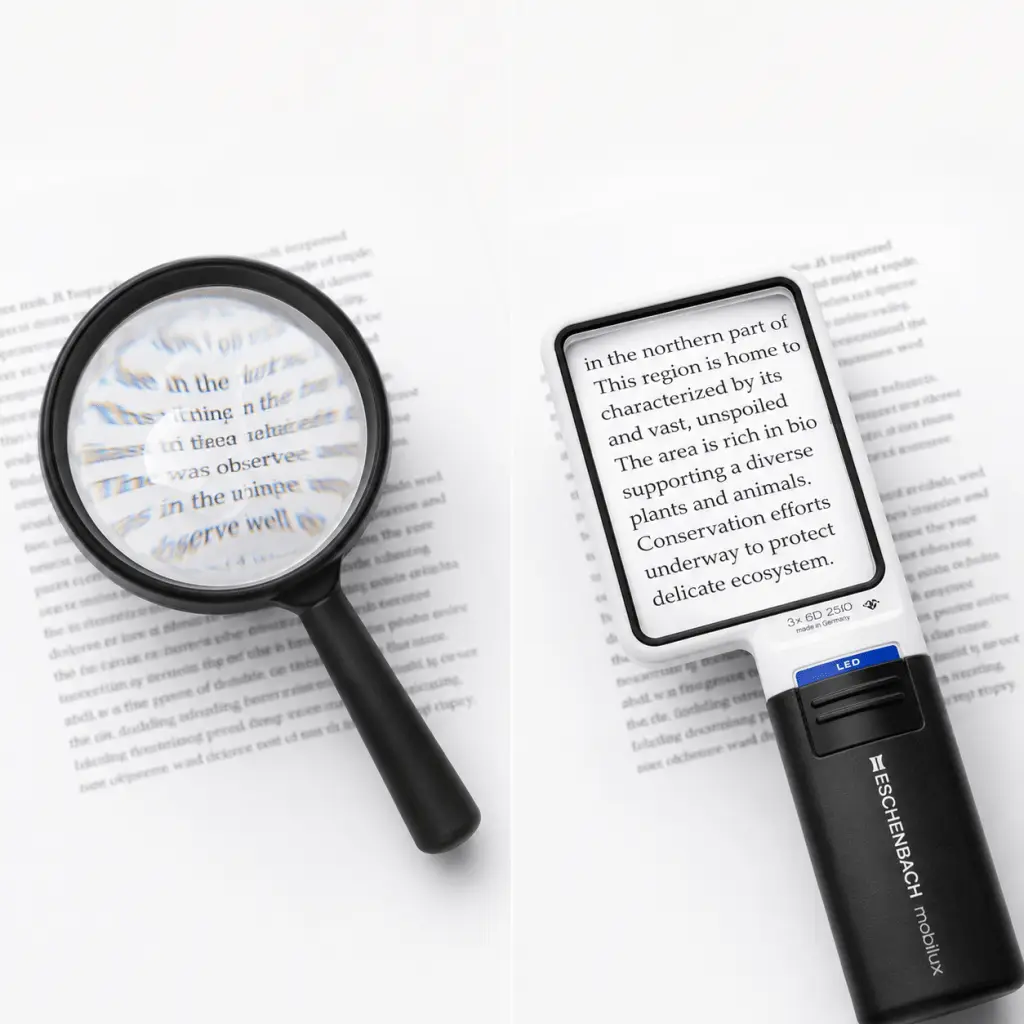
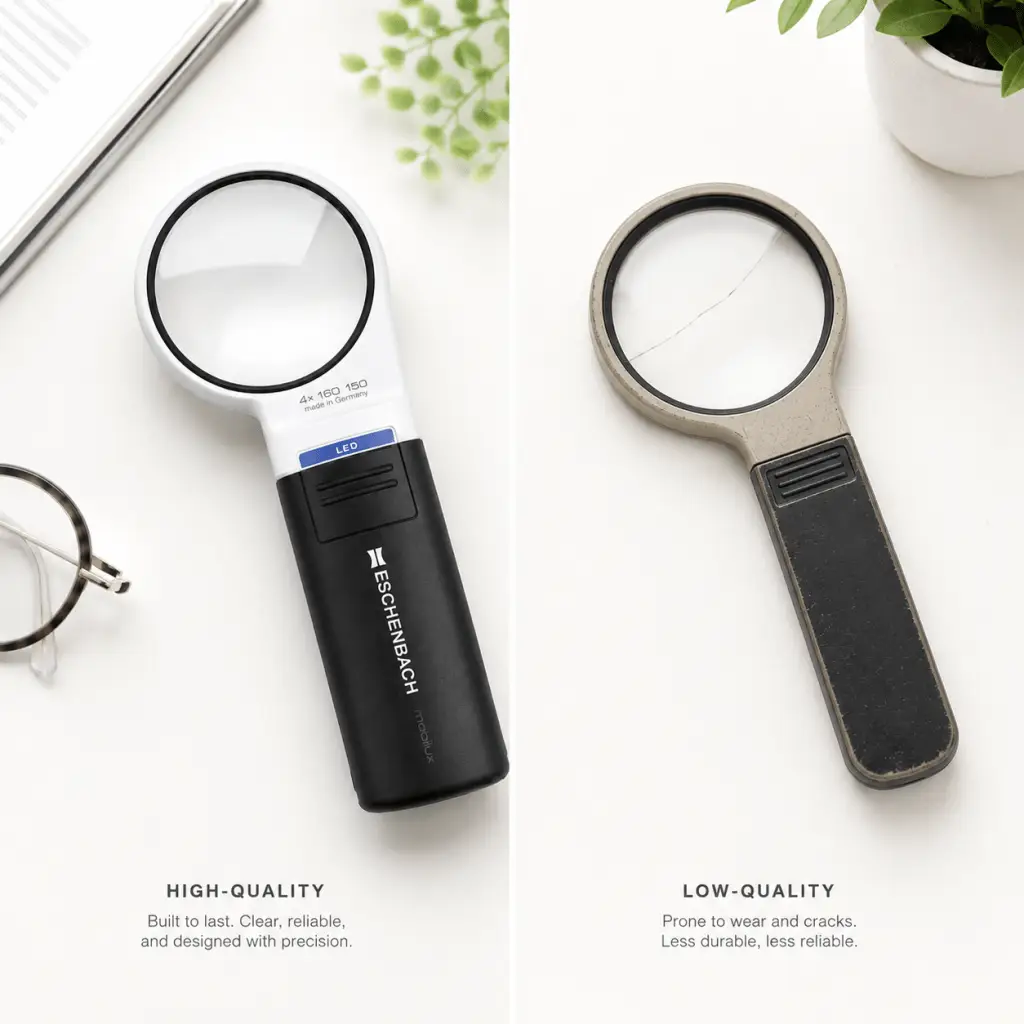
One of the biggest differences is the quality of the lens. Lower-cost magnifying glasses may enlarge the print but create blur, waviness, or distortion near the edges. A higher-quality magnifier is designed to provide a clearer image across more of the lens.
This can be especially important for reading because distorted letters can make the eyes work harder and may cause frustration during longer tasks.
A Larger Clear Viewing Area
A cheap magnifier may look large, but the area that stays truly clear can be much smaller than the lens itself. The center may look acceptable while the edges become blurry or distorted.
Higher-quality magnifiers are often designed to keep more of the viewing area clear and usable. That means you may be able to see more words at one time without constantly moving the magnifier.
This can make reading feel smoother and less frustrating, especially for mail, books, labels, and other everyday tasks.
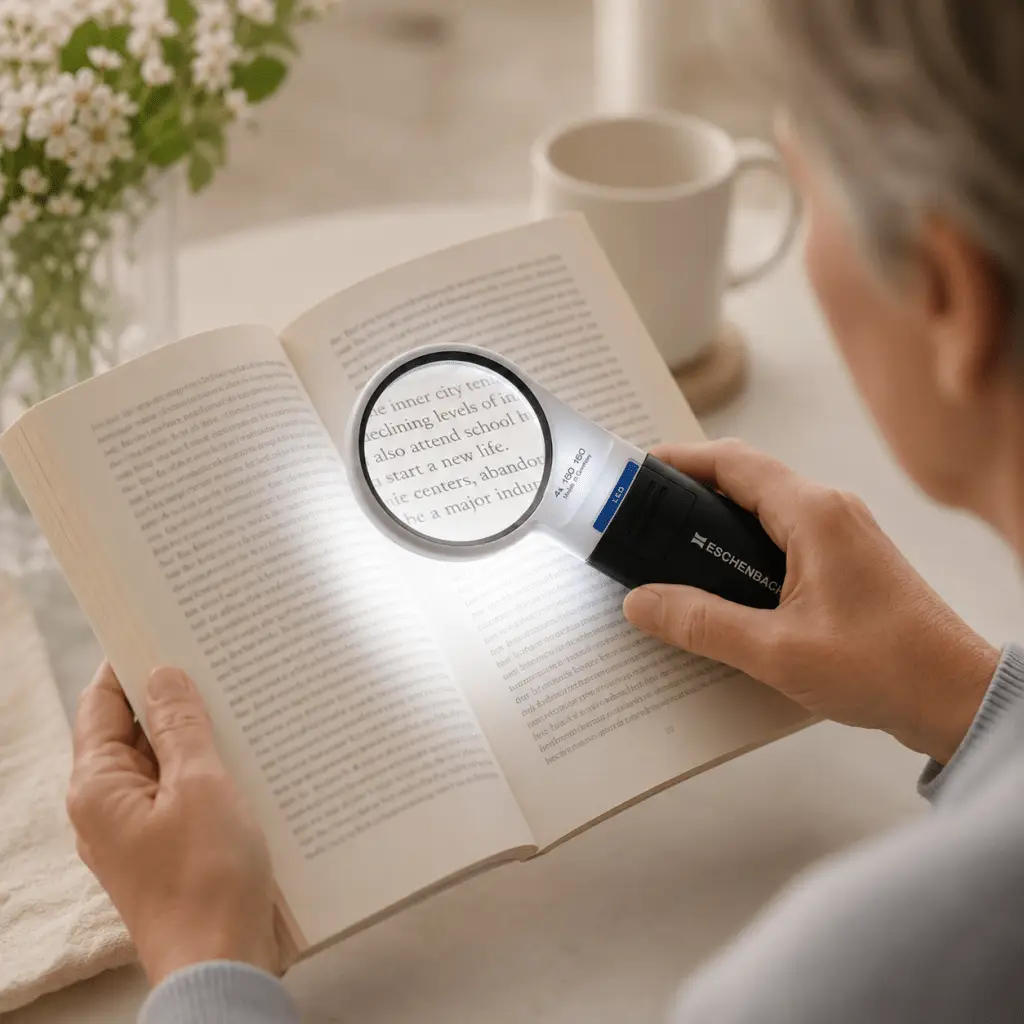
Better Lighting
A magnifier does more than enlarge print. Good lighting can improve contrast and make letters easier to see.
Lower-cost lighted magnifiers may produce uneven light, glare, shadows, or a dim bluish beam. The light may also fade quickly as the batteries weaken.
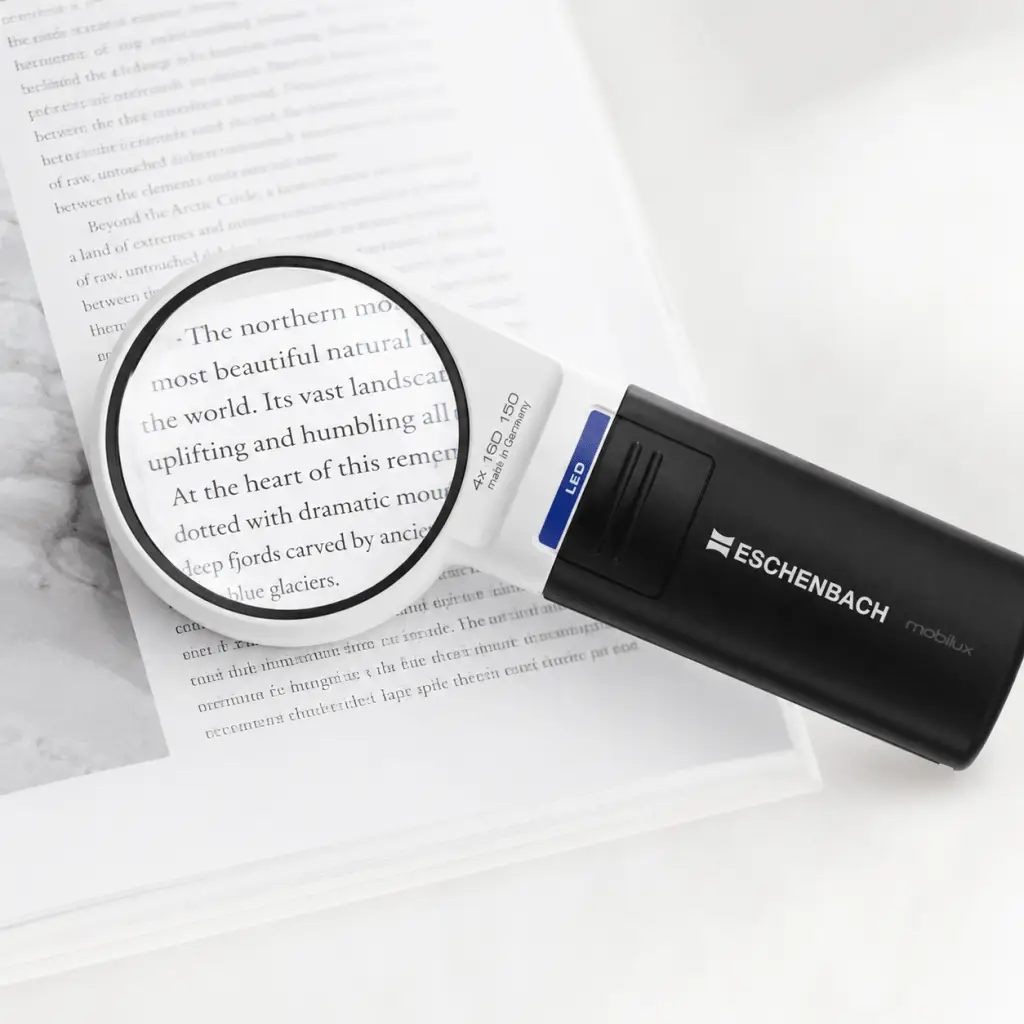
Higher-quality lighted magnifiers are often designed to spread light more evenly across the viewing area. This can help the print appear clearer and reduce the need to constantly reposition the magnifier.
Consistent lighting can be especially helpful when reading:
- prescription bottles
- menus
- product labels
- small print in dim rooms
A stronger light is not always better. The goal is even, comfortable illumination without glare.
More Comfortable to Hold and Use
A magnifier may have a clear lens and strong lighting, but it still needs to feel comfortable in the hand.
Lower-cost magnifiers may have heavier frames, awkward handles, stiff switches, or poor balance. These details may not seem important at first, but they can make longer reading tasks tiring or frustrating.
Higher-quality magnifiers are often designed with comfort and ease of use in mind. A well-balanced handle, simple controls, and a shape that feels natural in the hand can make the magnifier easier to position and use for everyday tasks.
This can be especially helpful for people who:
- have arthritis or reduced hand strength
- experience hand fatigue
- use a magnifier several times throughout the day
- need to hold the magnifier steady while reading
The best magnifier is not only clear. It should also feel comfortable and easy to use.

Better Durability and Longer-Lasting Performance
A magnifier may work well when it is new, but everyday use can reveal differences in how well it is made.
Lower-cost magnifiers may be more likely to develop loose handles, scratched lenses, weak switches, uneven lighting, or battery-compartment problems over time. Plastic parts may also feel less sturdy with repeated use.
Higher-quality magnifiers are often built with more durable materials and better construction. The lens housing, handle, light switch, and battery compartment are designed for regular everyday use.
Durability matters because a magnifier is often used many times throughout the day for tasks such as reading mail, checking labels, viewing prescription information, and reading small print.
A better-built magnifier may cost more initially, but it can provide more reliable performance and may need to be replaced less often.
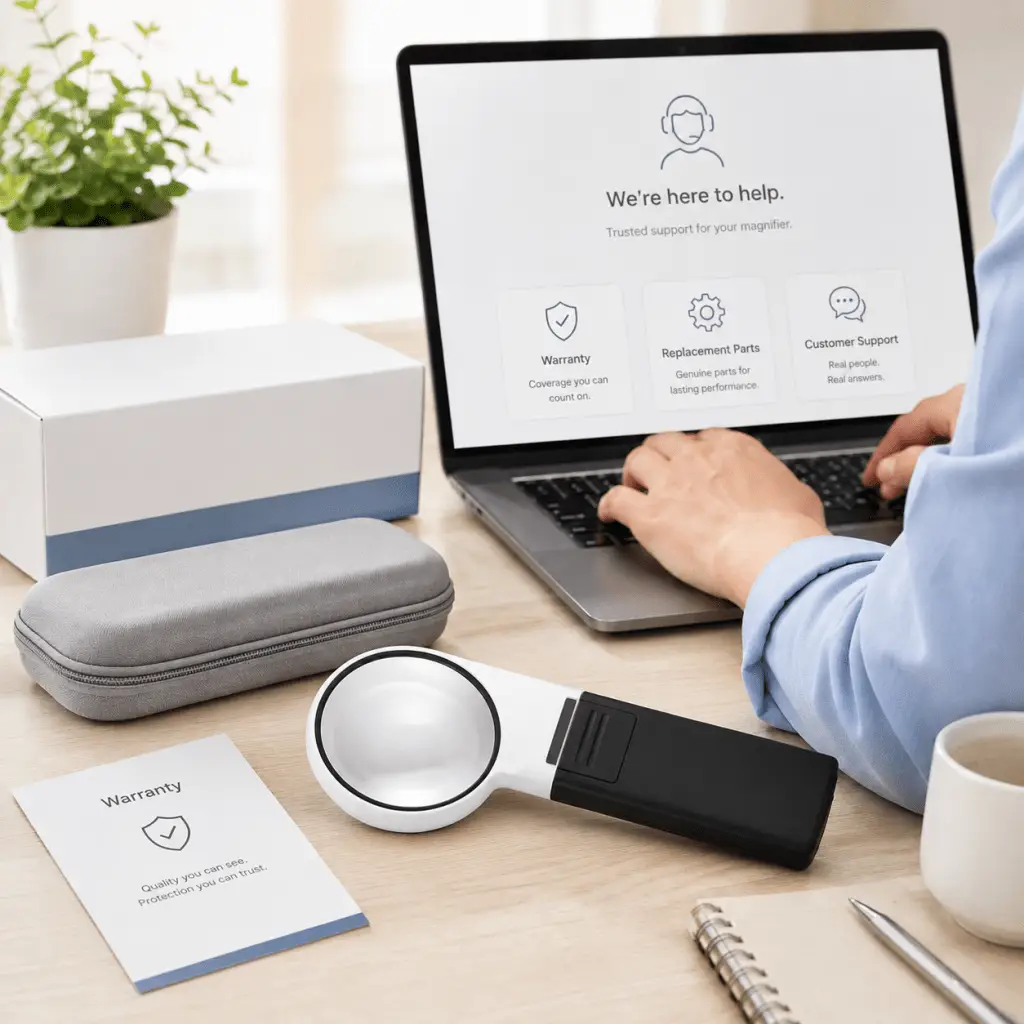
Warranty, Replacement Parts, and Customer Support
A lower-priced magnifier may be inexpensive to replace, but support can be limited if the light stops working, the switch fails, or a part becomes damaged.
Higher-quality magnifiers are often backed by established manufacturers that provide product information, warranties, replacement parts, or customer support. This can be especially important when someone relies on the magnifier every day.
Before choosing a magnifier, consider:
- Is there a manufacturer warranty?
- Are replacement parts or accessories available?
- Can you contact someone for help with the product?
- Is the brand known for producing low-vision products?
Support may not seem important when the magnifier is new, but it can add value over the life of the product.

We carry several magnifier brands at different price points because different customers have different needs. Some lower-cost magnifiers can work well for occasional reading or simple everyday tasks.
For customers looking for clearer optics, reliable lighting, comfortable design, and long-lasting performance, Eschenbach is the brand we most often recommend for overall quality. Its magnifiers are designed specifically for low vision use and are known for consistent performance and durable construction.
The best choice is not always the least expensive or the most expensive. It is the magnifier that fits the task, feels comfortable to use, and provides dependable performance over time.