

Can a Magnifier Help with Macular Degeneration?
Short answer: Yes.
While a magnifier cannot cure or reverse macular degeneration, it can help many people make better use of their remaining vision. For many individuals with macular degeneration, the right magnifier can make everyday tasks like reading mail, medication labels, menus, recipes, and books easier and more comfortable.
Not all magnifiers work the same way, however. The type of magnifier that works best depends on the severity of vision loss, the task being performed, and the amount of magnification needed.
In this guide, we’ll explain how magnifiers help people with macular degeneration, the different types available, and how to determine which solution may be right for you.
Why Reading Becomes Difficult with Macular Degeneration
Macular degeneration affects the central part of vision, making it harder to see fine details clearly. Many people notice that reading becomes more difficult because letters may appear blurry, faded, distorted, or even partially missing. Tasks that once seemed simple, such as reading medication labels, mail, recipes, books, or restaurant menus, can suddenly become frustrating.
In addition to central vision loss, many people with macular degeneration experience reduced contrast sensitivity. This can make dark print appear lighter and cause words to blend into the background, especially in poor lighting conditions. As a result, reading often requires more concentration, more light, and greater effort than it once did.


How Can a Magnifier Help If Central Vision Is Damaged?
Many people are surprised to learn that magnifiers can still help even when macular degeneration affects central vision. While a magnifier cannot restore damaged vision, it can make text and details appear larger, allowing many people to make better use of their remaining vision.
As words and objects become larger, they are often easier to recognize and require less effort to see. This can make everyday tasks such as reading mail, medication labels, recipes, books, and greeting cards more comfortable and less frustrating.
For many people with macular degeneration, the combination of magnification, better lighting, and improved contrast can make a significant difference in their ability to continue reading and performing everyday activities independently.
Why Lighting Matters
Many people with macular degeneration focus on magnification first, but lighting is often just as important. As vision changes, it can become more difficult to distinguish contrast, making words appear faded or harder to read, especially in dim lighting conditions.
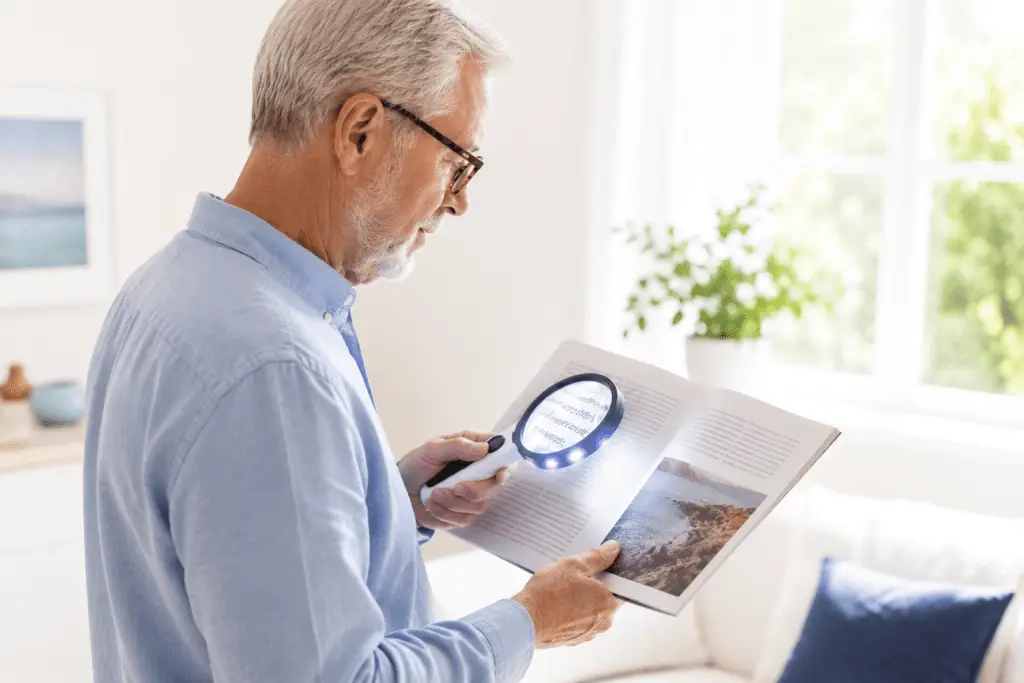
This is one reason lighted magnifiers are so popular among people with macular degeneration. By combining magnification with bright, even illumination, they can help make text appear sharper and easier to see while reducing shadows and eye strain.
Good lighting can make everyday tasks such as reading medication labels, recipes, bills, books, and greeting cards more comfortable. In many cases, the combination of proper lighting and the right amount of magnification provides better results than magnification alone.
Different Types of Magnifiers for Macular Degeneration
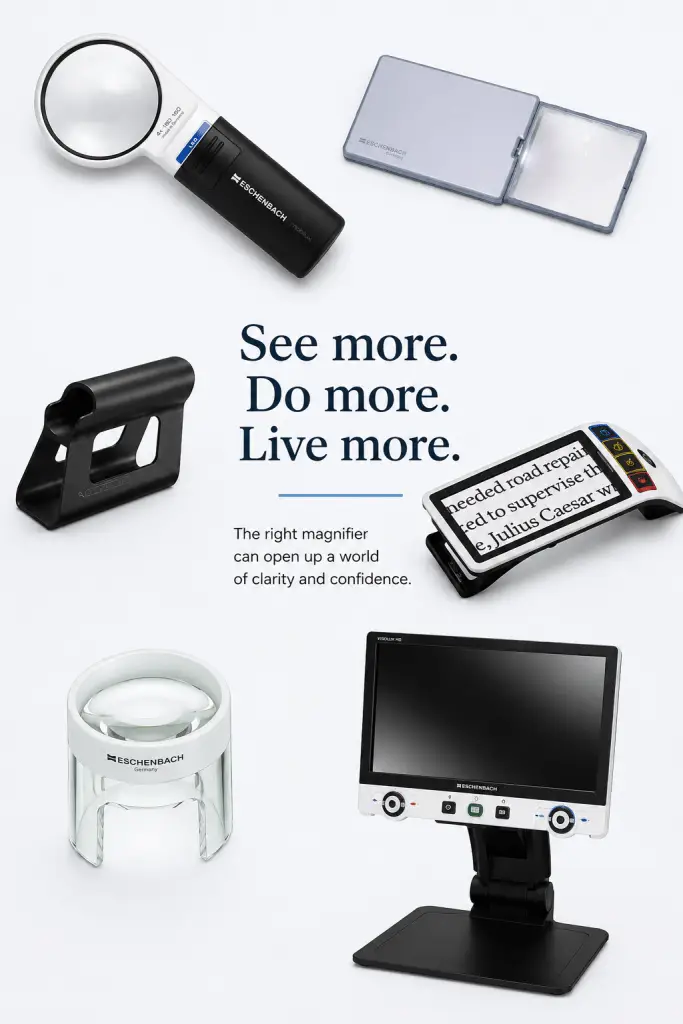
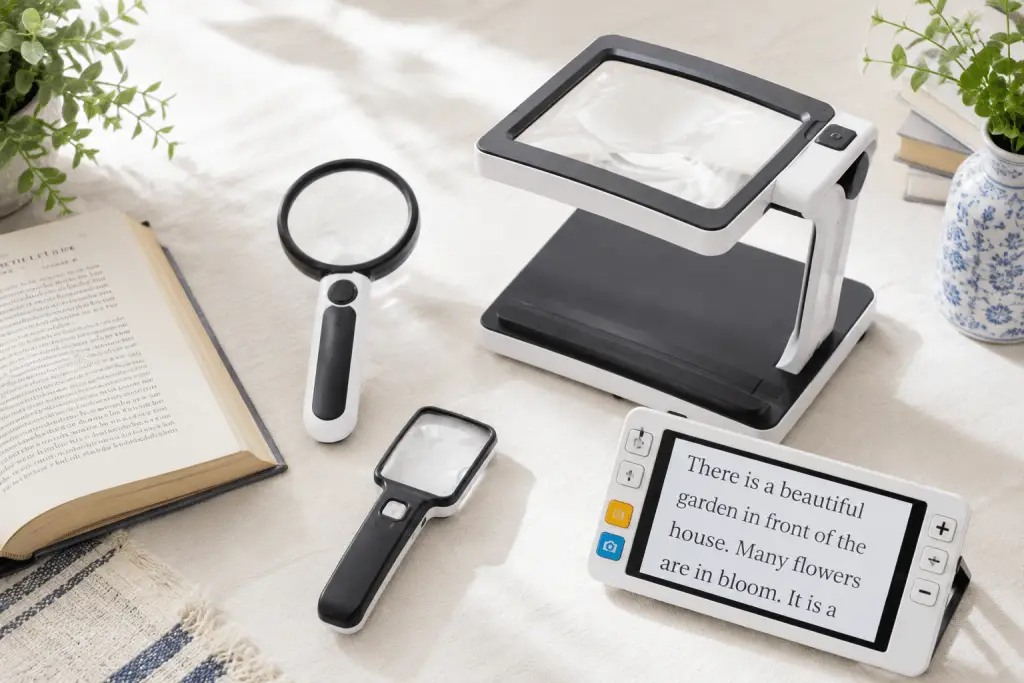
The best magnifier for macular degeneration depends on the severity of vision loss and the task you are trying to perform. While some people only need a little extra magnification for reading labels or menus, others may require stronger magnification for books, newspapers, and other extended reading tasks.
Handheld magnifiers WITH LIGHT are often a good starting point for people with mild to moderate vision loss. They are portable, easy to use, and work well for quick reading tasks such as medication labels, mail, recipes, and price tags.
As vision needs increase, many people find that stand magnifiers WITH LIGHT or electronic video magnifiers provide greater comfort and higher levels of magnification. These devices can make reading easier by enlarging text, improving contrast, and reducing the effort required to see fine details.
Handheld Magnifiers
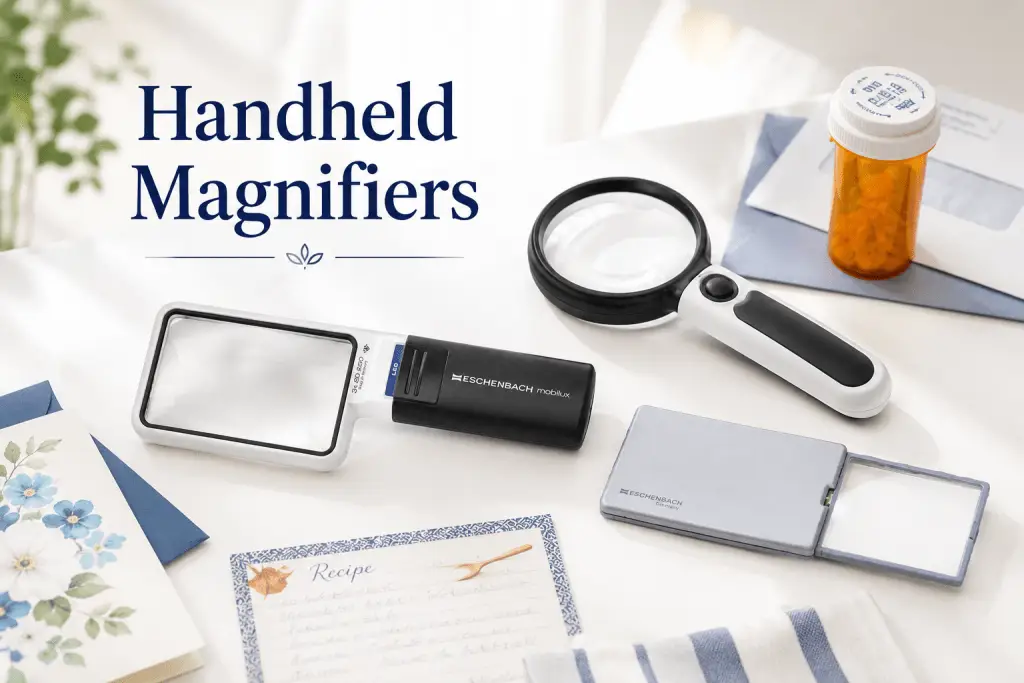
Handheld magnifiers are often the best place to start for people with macular degeneration. They are portable, easy to use, and work well for everyday tasks such as reading medication labels, mail, recipes, restaurant menus, price tags, and product packaging.
While handheld magnifiers are available in both lighted and non-lighted versions, most people with macular degeneration achieve better results with a lighted magnifier. In many cases, the added illumination is just as important as the magnification itself. Bright, even lighting can improve contrast, reduce shadows, and make printed words appear clearer and easier to read.
For people with mild to moderate vision loss, a quality lighted handheld magnifier can provide a simple and effective solution for many daily reading tasks while helping maintain independence and confidence.
Stand Magnifiers
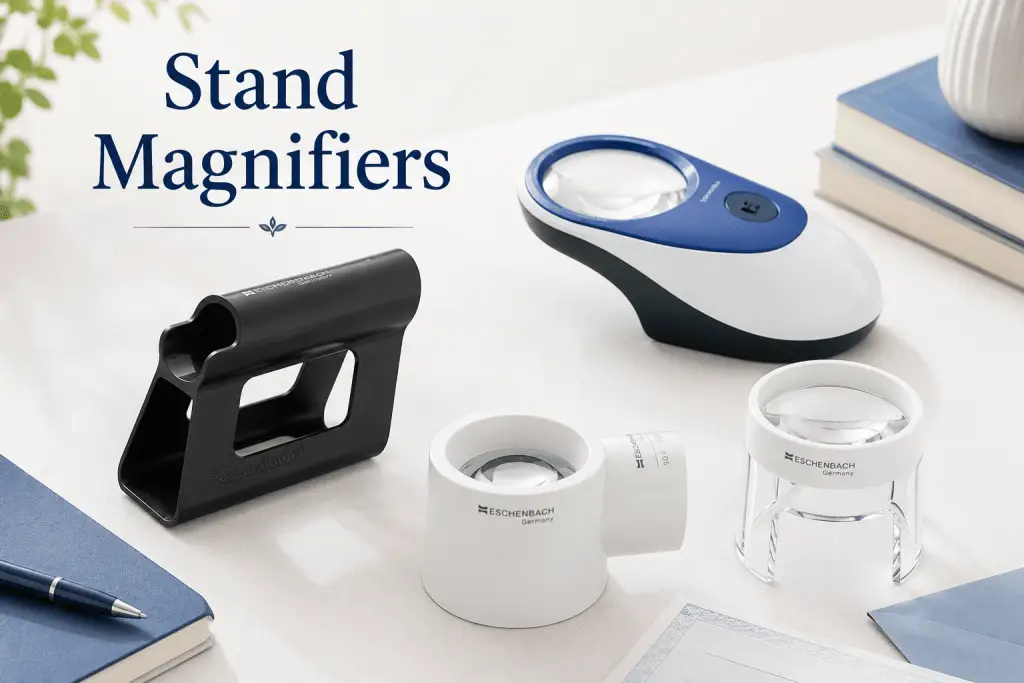
Stand magnifiers are often a great next step when a handheld magnifier is no longer providing enough magnification or comfort. Unlike handheld magnifiers, stand magnifiers rest directly on the reading material, maintaining the correct focal distance and eliminating the need to constantly hold the magnifier in position.
Many people with macular degeneration find stand magnifiers easier to use for extended reading sessions because they reduce hand fatigue and provide a more stable viewing experience. They are especially helpful for reading books, newspapers, magazines, bills, and other materials that require more than a quick glance.
Many stand magnifiers also include built-in lighting, which can further improve contrast and make text easier to see. For people with moderate vision loss, a stand magnifier can provide a comfortable balance between magnification, lighting, and ease of use.
Video Magnifiers
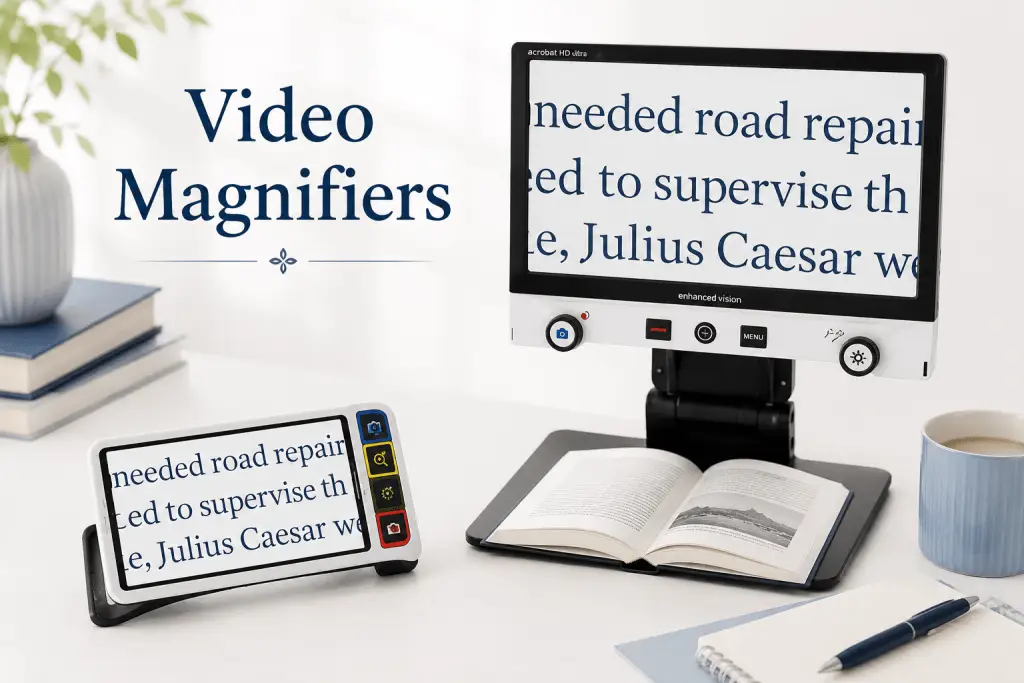
Video magnifiers are often the best solution for people with moderate to advanced macular degeneration who need more magnification than traditional optical magnifiers can provide. Instead of using a lens, video magnifiers use a camera and screen to enlarge text, photographs, and other objects, often making them much easier to see.
One of the biggest advantages of video magnifiers is their ability to improve contrast in addition to magnification. Many models allow users to switch between different color combinations, such as white text on a black background or yellow text on a blue background, helping make words stand out more clearly.
Video magnifiers can also provide significantly higher levels of magnification while maintaining a comfortable working distance. For many people with macular degeneration, they make it possible to continue reading books, mail, bills, recipes, and other important documents when traditional handheld or stand magnifiers are no longer enough.
Not sure what magnification you need? We CAN help!
Download and print our FREE reading chart here
What Matters Most
While a magnifier cannot cure or reverse macular degeneration, the right magnifier can make a meaningful difference in everyday life. Many people find they are able to read more comfortably, maintain their independence, and continue enjoying activities they love when they have the proper combination of magnification, lighting, and contrast.
There is no single magnifier that works best for everyone. The ideal solution depends on your vision, your goals, and the tasks you perform most often. Whether you choose a lighted handheld magnifier, a stand magnifier, or a video magnifier, finding the right tool can help you make better use of your remaining vision and reduce the frustration that often comes with reading and other close-up tasks.
If you’re not sure where to start, use our free reading chart to identify a magnification range that may work best for you. It can be a simple first step toward finding a solution that helps make everyday reading easier and more enjoyable.