
Why Is Reading Getting Harder?
Understanding Contrast Loss, Lighting, and Low Vision
Many people assume that if reading is becoming more difficult, they simply need a stronger pair of glasses. While that can sometimes be true, it is often only part of the story. As we age or experience vision changes from conditions such as macular degeneration, diabetic retinopathy, glaucoma, or cataracts, reading can become more challenging even when wearing the correct prescription.
You may find yourself holding reading material closer, searching for brighter light, struggling with faded print, or feeling tired after reading for only a short time. Understanding why this happens is the first step toward finding solutions that can make reading more comfortable again.
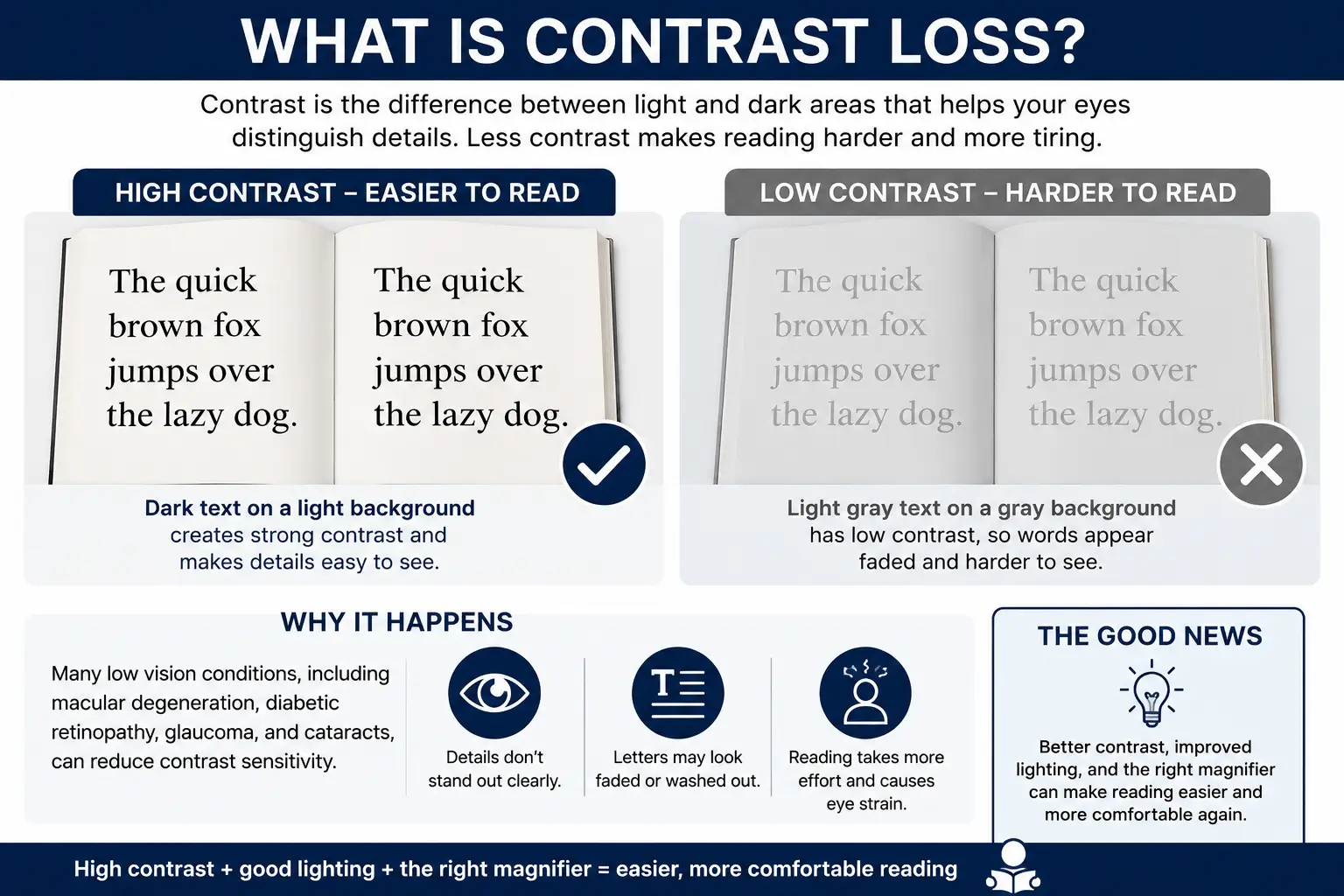
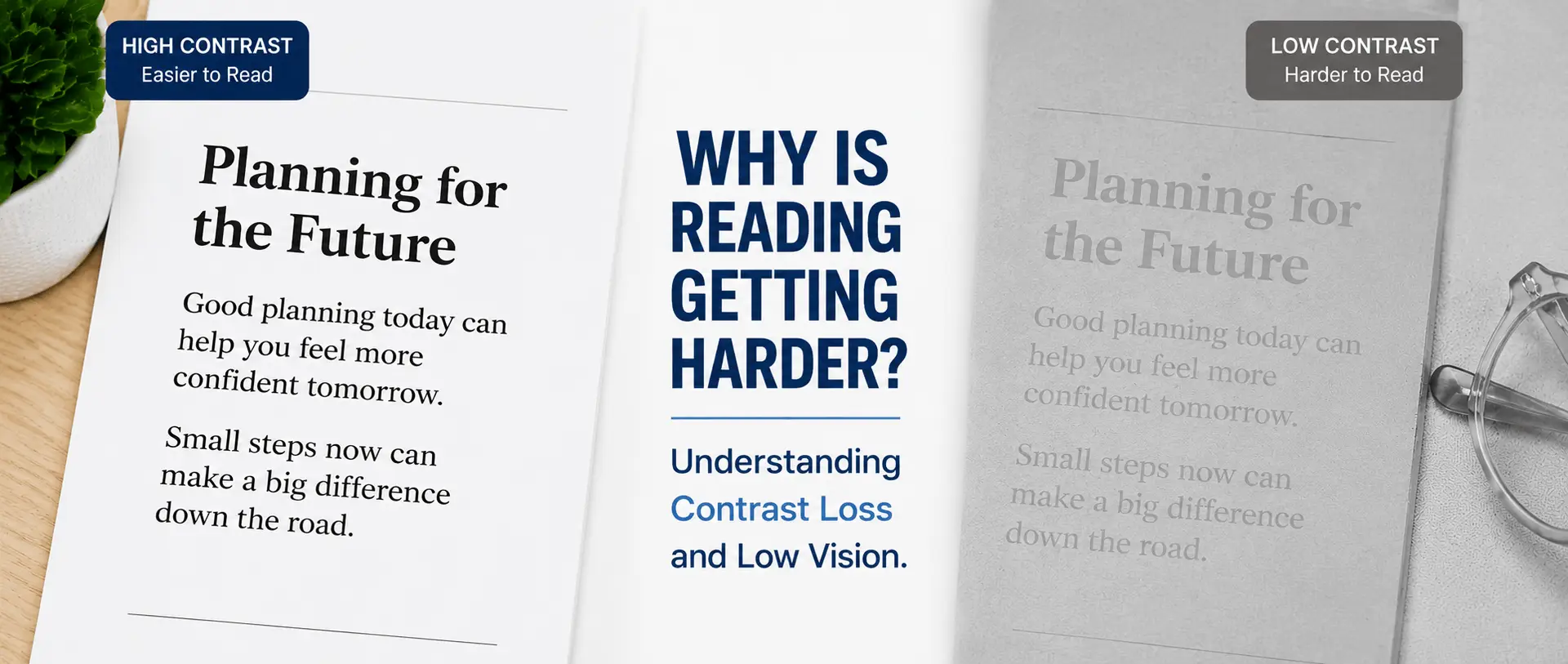
The image above shows a simple example of contrast loss. On the left, dark text stands out clearly against a light background, making it easy to read. On the right, the text is still present and technically visible, but because there is less contrast between the letters and the background, reading requires much more effort.
This is a common challenge for people with aging eyes that are starting to need smaller magnifications as well as macular degeneration and other low vision conditions. Many people describe words as looking faded, washed out, or less distinct than they once did. Even when the print is large enough to see, reduced contrast can make reading slower, more tiring, and more frustrating. This is one reason why improving lighting, increasing contrast, and using the right magnifier can often make a significant difference.
Why Good Lighting Makes Such a Big Difference
Many people focus on magnification first, but lighting is often just as important. As vision changes, the eyes typically need more light to see details clearly. Tasks that once felt easy—such as reading a recipe, sorting mail, reviewing bills, or reading medication labels—can become much more difficult in dim or uneven lighting.
Good lighting helps increase contrast and makes printed text stand out more clearly from the background. This is one reason why many people find that reading near a bright window, under a quality task lamp, or with a lighted magnifier is noticeably easier. The additional illumination can help reduce shadows, improve clarity, and make reading feel less tiring.
In many cases, the combination of proper lighting and the right amount of magnification produces better results than magnification alone. That’s why lighted magnifiers are often recommended for people experiencing low vision, macular degeneration, or difficulty reading small print.

Common Signs of Contrast Loss
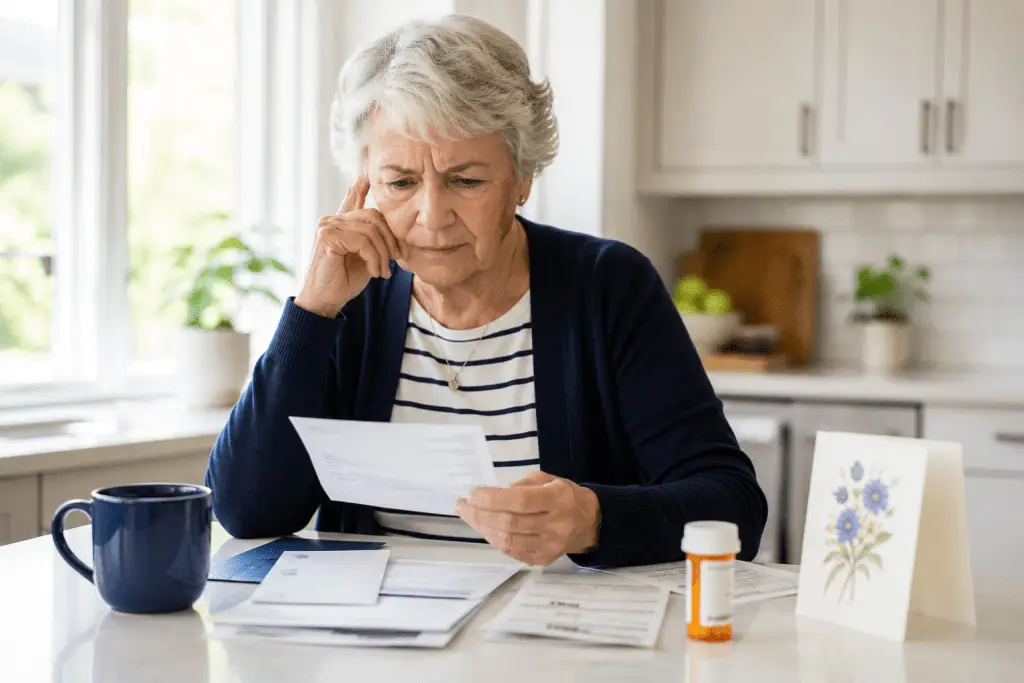
Many people assume that if they can still see an object, they should be able to see it clearly. However, contrast loss often affects the quality of vision before it significantly affects visual acuity. As a result, everyday tasks can become more challenging even when prescription glasses are up to date.
Common signs of contrast loss include:
• Needing brighter light to read comfortably
• Difficulty reading mail, bills, and greeting cards
• Struggling to read medication labels and instructions
• Words appearing faded, washed out, or less distinct
• Increased eye strain or fatigue while reading
• Difficulty reading restaurant menus, especially in dim lighting
• Greater sensitivity to glare from sunlight or indoor lighting
• Trouble seeing steps, curbs, or changes in surface height
• Difficulty recognizing faces from a distance
• Taking longer to complete reading tasks than you once did
If several of these situations sound familiar, reduced contrast sensitivity may be contributing to your reading difficulties. The good news is that improved lighting, better contrast, and the right low vision aids can often make reading more comfortable and enjoyable.
Simple Changes That Can Make Reading Easier
If reading has become more challenging, the good news is that small adjustments can often make a significant difference.
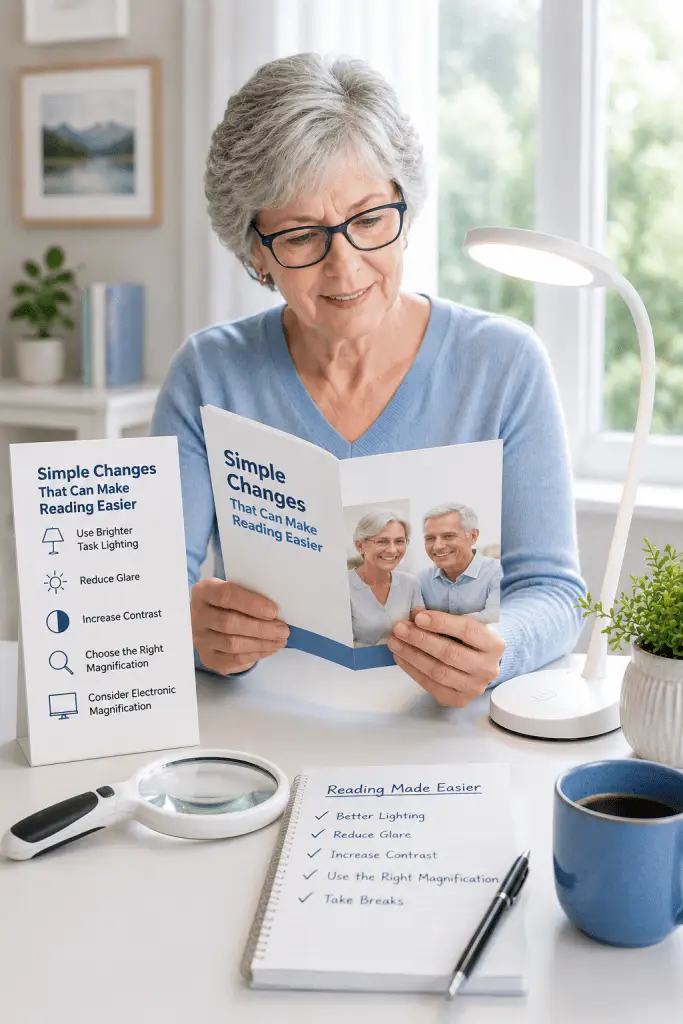
Use Brighter Task Lighting – A quality reading lamp can help increase contrast and make text easier to see, especially when reading books, mail, recipes, or medication labels. For additional illumination, many people benefit from a lighted handheld magnifier.
Reduce Glare – Sunlight, overhead lighting, and reflective surfaces can wash out details and make reading more difficult. Adjusting lighting or using glare-control glasses may help improve comfort and visual clarity.
Increase Contrast – Dark print on a light background is generally easier to read than low-contrast combinations. Bold line writing paper, bold-tip pens, and proper lighting can all help make details stand out more clearly.
Use a Dedicated Reading Lamp – A focused low vision reading lamp can direct light exactly where you need it, helping reduce shadows and making printed material easier to read for extended periods.
Choose the Right Magnification – Using too little magnification may not provide enough help, while too much magnification can reduce the visible reading area. Our free reading chart can help you determine which magnification range may work best for your needs.
Consider Electronic Magnification – For people who need more magnification, video magnifiers can enlarge text significantly while also improving contrast, making reading easier and more comfortable.
Small adjustments may not restore vision, but they can help you make better use of the vision you have and continue enjoying many of the activities that matter most.